
Gauri Kedareshwar Temple
श्री गौरी केदारेश्वर मंदिर
An ancient Kedar shrine in Kedar Gali where Lord Shiva is worshipped with Goddess Gauri — a sacred replica of Kedarnath for devotees who seek darshan in Varanasi.
Lord Kedareshwar (Shiva) with Goddess Gauri
Kedar Gali, Sonarpura Kedar Gali, Sonarpura Chauraha, Pitambar Pura, Varanasi, Uttar Pradesh 221001
Early morning to evening (timings may vary on festivals; confirm before visit)
Rudrabhishek, Ganga Abhishek, Gauri-Shankar Yajna, Navagraha Shanti, Bel Patra archana, Khichdi Vitran Seva (prasad from 9:00 AM), Mangla Aarti, Bhog Aarti, Sapta Rishi Aarti, Shringar Bhog Aarti
Gauri Kedareshwar Temple (Shree Gauri Kedareshwar) is a revered Shiva–Shakti shrine in Kedar Gali near Sonarpura, Varanasi. Here Lord Shiva is worshipped as Kedareshwar alongside Goddess Gauri, giving the temple its name and its standing as one of the important Kedar temples of Kashi.
The temple is especially meaningful for elderly devotees and pilgrims who wish to receive the blessings of Kedarnath without travelling to the Himalayas. Local tradition holds that this sacred spot in Varanasi carries the same spiritual merit as the original Kedarnath tirtha.
Legends and Spiritual Significance
Scriptures such as the Skanda Purana and Kashi Mahatmya mention this holy ground. It is believed that Goddess Gauri performed penance here to attain Lord Shiva as her consort — a story elaborated in the Kedar Khanda. The temple therefore symbolizes divine feminine energy, sacred vows, and unwavering devotion.
Devotees visit for darshan, abhishek, and peace of mind. The saying that liberation is found in Kashi resonates deeply at this shrine, where Shiva and Shakti are worshipped together.
Architectural Features
Distinct Dravidian-style gopuram (entrance tower) with a South Indian appearance
Black stone Shiva Lingam in the sanctum with Nandi facing the deity
Intricately carved pillars and mandapam with religious motifs
Colourful walls depicting gods and mythological scenes
Festivals Celebrated
Maha Shivaratri — night vigil, special abhishek, and devotional programmes
Navratri — worship of Gauri, kanya bhoj, and Devi stotras
Shravan Month — Mondays attract large numbers of Shiva devotees
Kartik Month — deep lamp offerings and evening bhajans
Seva and Offerings
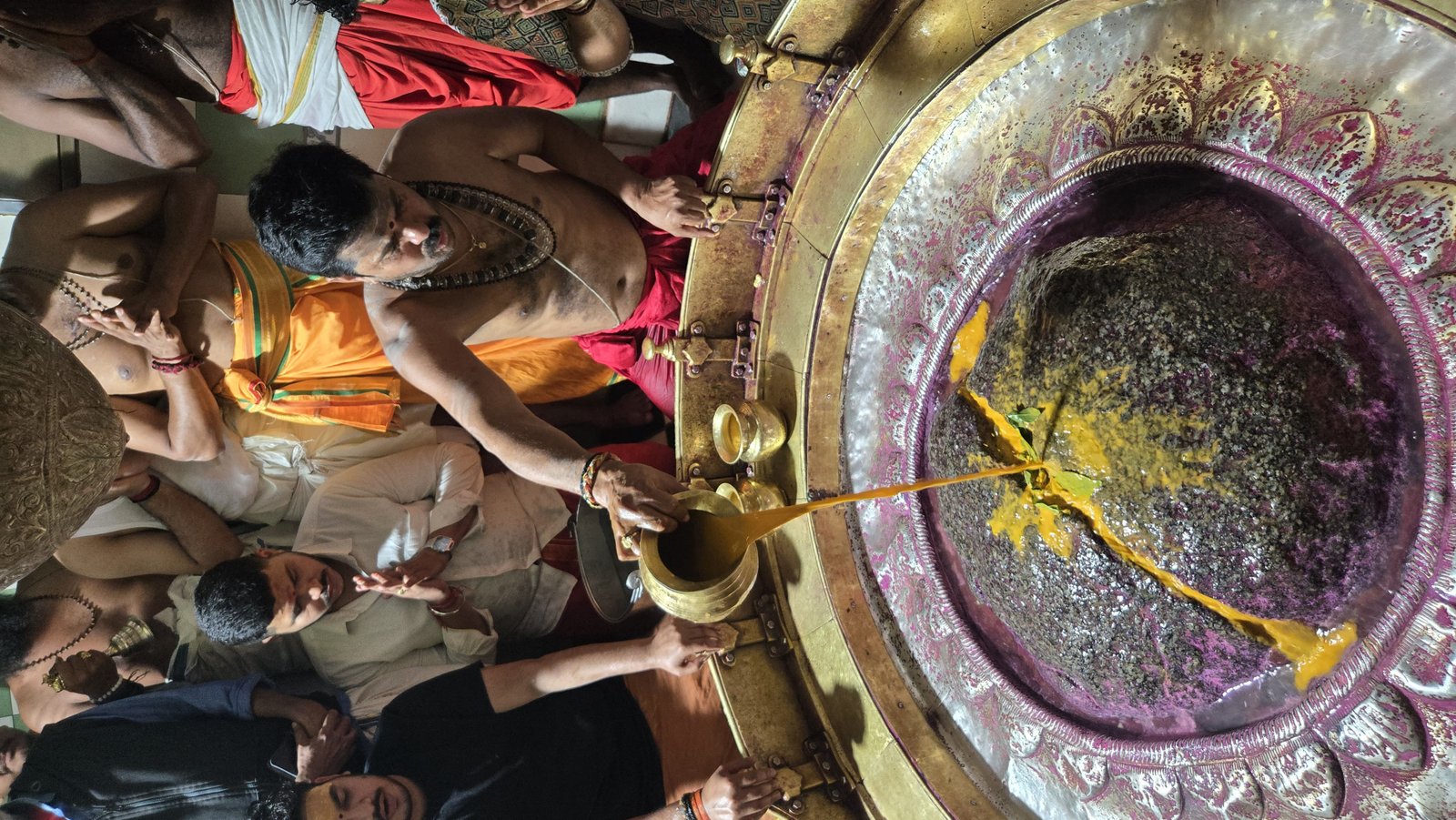
Daily worship includes abhishekam with milk, water, ghee, honey, and curd; archana and aarti at multiple times. Devotees commonly offer bilva leaves, flowers, milk, and sandalwood paste. Khichdi Vitran Seva — sattvic prasad offered to the deities and distributed to devotees — is held from 9:00 AM onwards.
History & Significance
References to Gauri Kedareshwar appear in ancient texts including the Skanda Purana and Varanasi Mahatmya. According to tradition, a South Indian king established the present temple in the 7th century as a replica of Lord Kedarnath from Uttarakhand, so elderly and infirm devotees unable to climb the Himalayan pilgrimage could still receive Kedarnath’s grace in Kashi.
The temple forms part of the spiritual landscape of Kedar Gali and is associated with the Kashi Panch Kedar Yatra, where many pilgrims conclude their circuit at this shrine. Goddess Gauri’s penance and union with Shiva at this site make it a centre of both Shaiva and Shakti devotion.
Special yajnas such as Gauri-Shankar Yajna (marital harmony), Rudrabhishek (health and prosperity), and Navagraha Shanti (planetary peace) are regularly performed. Many families also perform tarpan and related rituals at nearby ghats after darshan.
Visitor tips: Located in Kedar Gali near Sonarpura Chauraha — reachable by auto-rickshaw or on foot. Leave footwear outside; photography may be restricted inside the sanctum. For puja booking and seva details, contact the temple office before your visit.
Best Time to Visit
Visit early morning for peaceful darshan. Evenings are cooler and ideal; avoid midday heat in summer. Tuesdays, Shravan month, and Maha Shivaratri draw large gatherings.