
Tulsi Manas Mandir
तुलसी मानस मंदिर
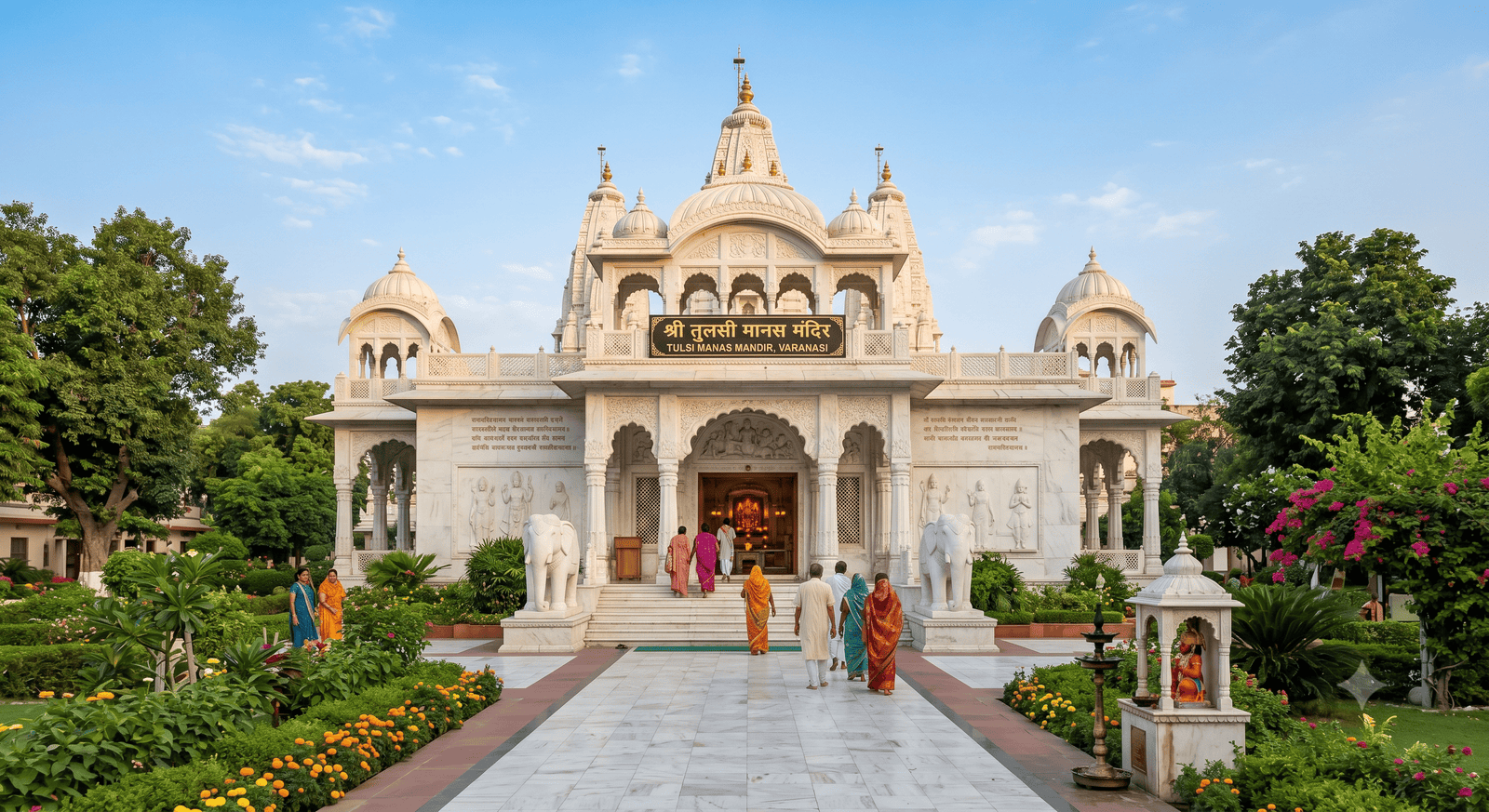
Tulsi Manas Mandir is one of the most revered temples in Varanasi, dedicated to Lord Rama. Built at the site where Saint Goswami Tulsidas is believed to have composed the Ramcharitmanas, the temple attracts devotees and tourists from across the world. The walls of the temple are beautifully inscribed with verses from the Ramcharitmanas, making it a significant spiritual and cultural landmark in Kashi.
Lord Rama, Goddess Sita, Lord Lakshmana and Lord Hanuman
Durga Kund Road, Varanasi, Uttar Pradesh Tulsi Manas Mandir, Durga Kund Road, Near Durga Temple, Bhelupur, Varanasi, Uttar Pradesh 221005, India
Morning: 5:30 AM – 12:00 PM Evening: 3:30 PM – 9:00 PM
Morning and evening aartis are performed daily with devotional chanting and prayers dedicated to Lord Rama and Hanuman.
Tulsi Manas Mandir – A Sacred Symbol of Devotion and Literature
Tulsi Manas Mandir is one of the most revered religious landmarks in Varanasi and holds immense importance in Hindu spirituality and literature. The temple stands at the sacred location where the great saint-poet Goswami Tulsidas is believed to have composed the Ramcharitmanas, the devotional retelling of Lord Rama's life in the Awadhi language.
Constructed entirely from white marble, the temple beautifully preserves the legacy of Tulsidas and the teachings of Lord Rama. The walls of the temple are adorned with verses and scenes from the Ramcharitmanas, allowing devotees to immerse themselves in the spiritual wisdom of this sacred text.
Dedicated to Lord Rama, Goddess Sita, Lord Lakshmana, and Lord Hanuman, the temple attracts pilgrims, devotees, scholars, and tourists from across India and around the world.
The peaceful environment, devotional atmosphere, and rich cultural heritage make Tulsi Manas Mandir an essential stop during any spiritual journey through Kashi.
History & Significance
Historical Importance
Tulsi Manas Mandir was built in 1964 by the Sureka family of Kolkata at the site where Goswami Tulsidas composed the Ramcharitmanas during the 16th century. The temple commemorates one of the most important literary and spiritual achievements in Hindu history.
The Ramcharitmanas transformed the teachings of Lord Rama into a language that was easily understood by the common people, making devotion accessible to millions of devotees.
Religious Significance
The temple serves as a living tribute to Goswami Tulsidas and his devotion to Lord Rama. It is considered a sacred destination for those seeking spiritual wisdom, divine blessings, and a deeper understanding of Hindu scriptures.
Many devotees visit the temple to recite passages from the Ramcharitmanas and seek blessings for peace, prosperity, and spiritual growth.
Architectural Highlights
White marble temple architecture
Verses of Ramcharitmanas engraved on walls
Beautiful idols of Lord Rama, Sita, Lakshmana, and Hanuman
Ramayana-themed displays and artwork
Peaceful prayer halls and gardens
Best Time to Visit
October to March offers the most pleasant weather for temple visits. Devotees also prefer visiting during Ram Navami, Diwali, and other major Hindu festivals when special celebrations and devotional programs are आयोजित.